Foundational EMT Kits That Strengthen Patient Evaluation Skills
Aspiring EMTs embark on a challenging yet rewarding journey where the right tools play a pivotal role in transforming theoretical knowledge into practical competence. Among the most trusted resources for EMS students are the essentials kit and the basic vitals kit.
These purpose-built kits provide the foundational emt tools that helps beginners build confidence and precision from the very start of their education. The essentials kit serves as the first step, offering essential items that align with minimum program requirements.
Meanwhile, the basic vitals kit takes students further by equipping them with specialized tools like clinical stethoscopes and blood pressure cuffs, all selected to support accurate vital sign assessment.
By investing in tools that are user-friendly and curriculum-aligned, students avoid common training frustrations and focus on mastering patient care techniques.
As a result, these kits not only prepare trainees for clinical rotations but also establish a strong foundation for EMS professionals throughout their careers.
Why Early Equipment Choices Matter in Skills Training
The right equipment choice early in an EMT program can significantly impact the quality of skills acquisition, ensuring that students focus on technique rather than tool limitations.
This decision lays the groundwork for habits that carry into professional practice, highlighting the importance of informed selections.
Early choices also affect group dynamics in training sessions, as shared experiences with dependable gear enhance collaborative learning environments.
When equipment performs consistently, students can dedicate more energy to mastering protocols and less to troubleshooting.
MedTechKits: Where Training Meets Purpose
MedTechKits was created to support EMT students who need dependable tools from the very beginning of their training, with each medkit designed to match educational requirements and hands on learning needs.
Every product offered by MedTechKits is selected with intention, reflecting the realities of EMT coursework and practical assessments.
Rather than overwhelming students with unnecessary items, the kits prioritize essentials that reinforce accuracy and readiness during labs and early evaluations.
By providing equipment that aligns with EMS programs and instructor expectations, MedTechKits helps bridge the gap between classroom instruction and skill execution.
Building a Strong Foundation With the Essentials Kit
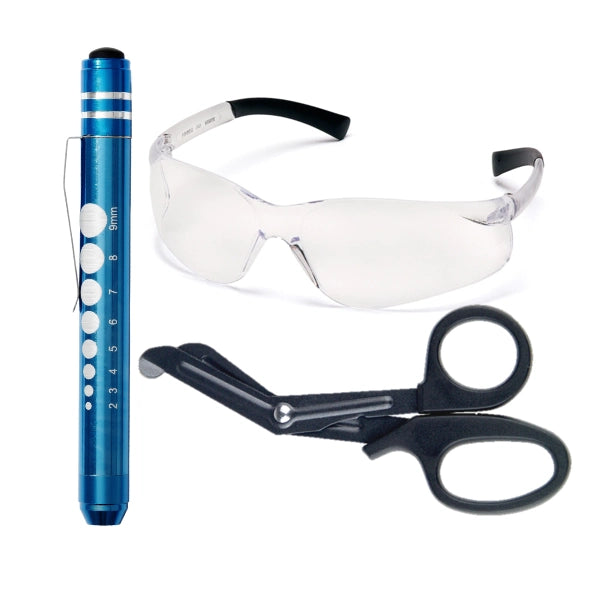
The essentials ems kit stands as a vital starting point for aspiring EMTs, carefully designed to deliver the core tools needed during the earliest stages of training.
Tailored specifically for entry-level EMS students, this compact kit provides high-quality equipment that aligns perfectly with basic program requirements.
Its thoughtful selection helps beginners gain hands-on experience right away, turning classroom concepts into practical confidence.
Contents of the Essentials Kit
- Waterproof aluminum penlight for clear lighting during patient assessments
- ANSI Z87.1 certified safety glasses to ensure eye protection in training environments
- Titanium-coated stainless steel trauma shears for safe and efficient cutting of clothing or materials
Developing Accurate Assessments Using the Basic Vitals Kit
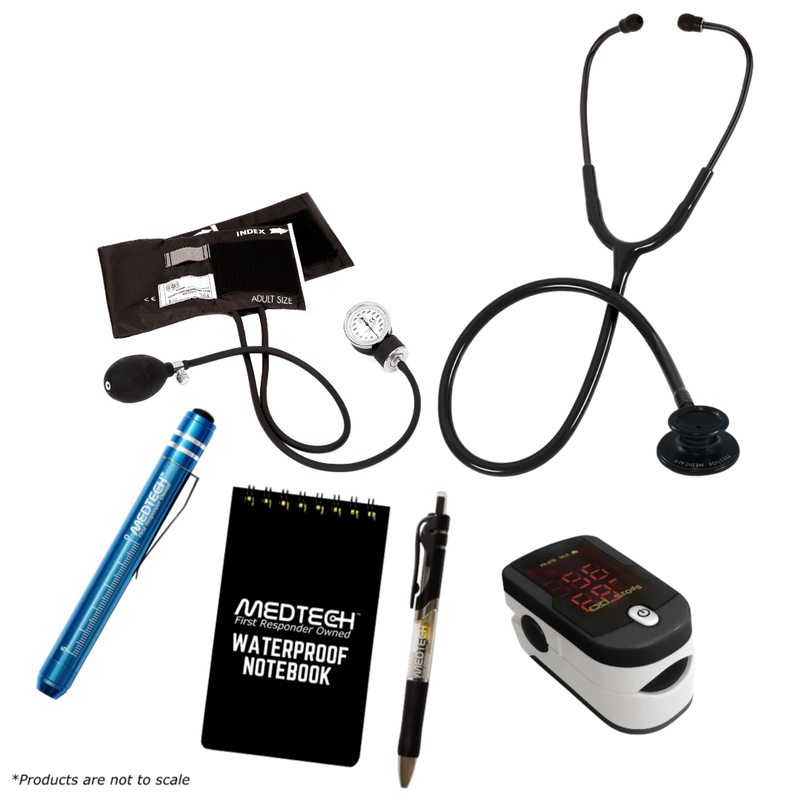
The basic vitals kit is specifically crafted to empower EMT students with the precise instruments required for mastering vital sign assessment during their training.
Its design emphasizes accuracy and relevance to real EMS protocols, making it an indispensable companion for developing clinical competence.
What sets the basic vitals kit apart is its attention to functionality, allowing students to select configurations that suit their preferences and improve their daily experience with the equipment.
Contents of the Basic Vitals Kit
- Prestige Medical Clinical Lite Stethoscope for clear and accurate auscultation of heart and lung sounds
- Blood Oxygen Saturation Monitor for reliable measurement of oxygen saturation levels
- Blood Pressure Cuff for precise manual blood pressure readings
- Waterproof Notepad for organized documentation of vital signs and observations
- Pen Light Medical for pupil assessment and enhanced visibility during examinations
How These Kits Reinforce Core Patient Evaluation Skills
Both the essentials and basic vitals kits work in tandem to strengthen key evaluation abilities, from initial scene safety to detailed health checks.
Students using these tools learn to integrate multiple assessments seamlessly. This reinforcement ensures that core skills become second nature, vital for effective patient management.
The kits' high-quality materials endure repeated use, allowing for extensive practice without degradation. Instructors note that such reliability helps students identify subtle patient cues more effectively.
Avoiding Common Training Gaps Through Proper Equipment
Common pitfalls in EMT training, such as inaccurate readings or delayed responses, can be mitigated with appropriate tools from these kits. The essentials kit addresses basic gaps by providing durable items that prevent equipment failure during critical moments.
Similarly, the basic vitals kit ensures precise measurements, reducing errors in vital assessments. By selecting purpose-built gear, programs minimize inconsistencies that arise from mismatched or low-quality alternatives.
Preparing for Clinical Rotations With Purpose-Built Tools
Purpose-built tools like those in the essentials and basic vitals kits equip students for the demands of clinical rotations, where hands-on patient interaction is paramount.
These kits ensure familiarity with equipment used in actual healthcare settings, easing the transition. Rotations become opportunities for refinement rather than initial learning curves.
During placements, the kits' portability allows quick access to essentials, supporting efficient evaluations in busy environments.
Mentors observe that prepared students perform better, applying skills with greater assurance. This preparation ultimately enhances the value derived from rotational experiences.
Final Thoughts: Setting the Standard for Long-Term EMS Readiness
Training as an EMT is shaped by the tools students rely on from their first skills lab onward. When equipment supports learning instead of complicating it, confidence develops naturally and assessments become more precise.
The essentials kit and basic vitals kit reinforce this progression by providing consistency during practice and early clinical exposure. These kits do more than meet program requirements. They help students establish habits rooted in accuracy and attention to detail.
Familiarity with reliable tools, along with supplementary practice using resources like the lifepak simulator, allows learners to focus on patient evaluation and decision making, creating a smoother transition from structured training environments to clinical settings.
Purpose built kits lay the groundwork for dependable performance and thoughtful care. By starting with tools designed to support growth, future EMS professionals enter the field with a foundation built for long term readiness and sustained competence.
Frequently Asked Questions
Q1. What is the main difference between the essentials kit and the basic vitals kit?
The essentials kit is your entry-level starting point, focusing on basic safety and access tools like a waterproof penlight and titanium-coated trauma shears, perfect for meeting minimum program requirements and gaining initial hands-on experience. The basic vitals kit builds on that by providing specialized tools for accurate vital sign assessment, including a prestige stethoscope and pen light.
Q2. Are these kits required for EMT programs?
Many instructors recommend similar purpose-built tools to align with curriculum standards and avoid frustrations from low-quality gear. These kits are designed to meet or exceed typical minimums for EMT training and early clinical rotations, so they’re a safe and reliable choice.
Q3. What skills do these kits help me develop?
They reinforce core patient evaluation abilities: scene safety and basic access, plus accurate vital sign measurement, pupil assessment, and organized documentation. Using them together helps integrate assessments seamlessly, making skills second nature for effective patient management.
Q4. Will these kits prepare me for clinical rotations?
Absolutely. The tools mirror equipment used in real healthcare settings, so you’ll feel familiar and confident during hands-on patient interactions. Their portability supports quick access in busy environments, turning rotations into opportunities for skill refinement rather than learning new gear on the spot.
Training Tools and References for EMTs
1. EMS Stethoscopes and Accessories That Support Student Training
2. How Proper Lighting Improves Clinical Assessments in EMS Care
Comments
Post a Comment